Introduction
Data types in Python define the type of value a variable can store. They help Python understand how to process and perform operations on different kinds of data such as numbers, text, and logical values.
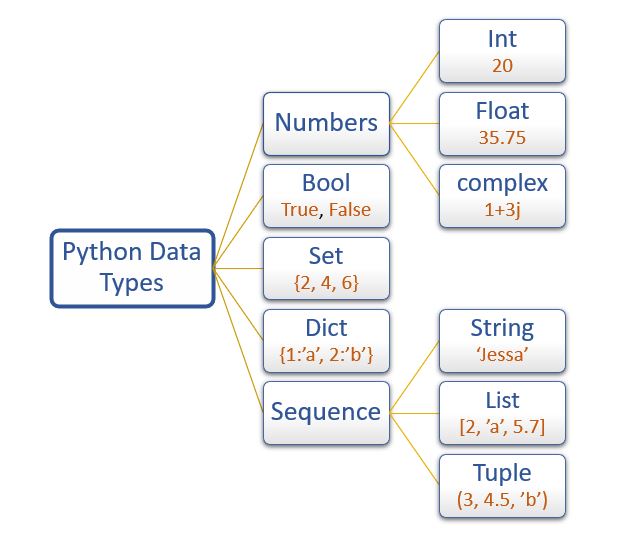
What are Data Types?
A data type specifies the kind of data stored in a variable. Every value in Python belongs to a specific data type, which determines what operations can be performed on it.
Main Data Types in Python
1.Integer (int)
Description:
Integers are whole numbers without any decimal point. They can be positive, negative, or zero.
Examqele:
                x = 10

y = -5
2. Float (float)
Description:
Float represents numbers that contain decimal points. These are used when precision is required.
Example:
                    pi = 3.14

price = 99.99
3. String (str)
Description:
A string is a collection of characters enclosed in single or double quotes. It is used to store text data.
Example:
                    name = "Phani"

message = 'Hello World'
4. Boolean (bool)
Description:
Boolean data type represents only two values: True or False. It is mainly used in conditions and decision-making.
Example:
                    is_student = True

is_logged_in = False
Checking Data Type
Description:
Python provides a built-in function type() to check the data type of a variable.
Example:
                x = 10

print(type(x))
Why Data Types are Important
Description:
Data types help Python handle data correctly and efficiently. Without them, the program would not know how to process different values.
Key Points:
- Ensure correct operations
- Improve code readability
- Help avoid errors
- Make programs efficient
Conclusion
Data types are a fundamental concept in Python programming. By understanding them, you can write better programs and handle different kinds of data effectively.